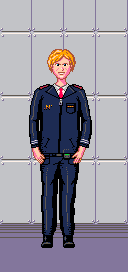
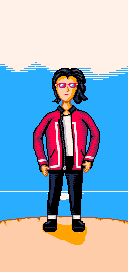
Pixel art OCs: Fred
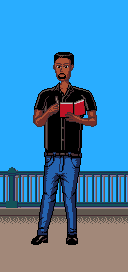
Ellie, Fred and Gabby are a set of three characters I drew in the last week or so. Mostly made to experiment with drawing different things, they don’t have much of an actual character (yet?).
Characters:
Ellie, Fred and Gabby are a set of three characters I drew in the last week or so. Mostly made to experiment with drawing different things, they don’t have much of an actual character (yet?).
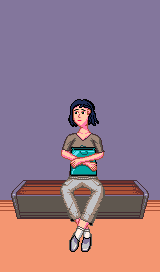
Ellie, Fred and Gabby are a set of three characters I drew in the last week or so. Mostly made to experiment with drawing different things, they don’t have much of an actual character (yet?).
It’s become increasingly clear that in a lot of countries, the right has pretty much abandoned any ambition of still believing in “fairness” or “equality under the law” – perfectly willing to openly enrich themselves and their friends using government powers or declare entire groups of people as lower-class. There is a popular quote by musician Frank Wilhoit that goes:
Conservatism consists of exactly one proposition, to wit:
There must be in-groups whom the law protects but does not bind, alongside out-groups whom the law binds but does not protect.
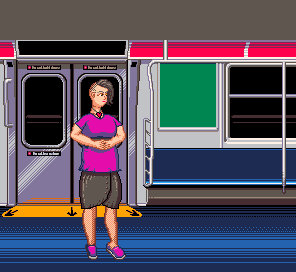
So yeah, I messed up the scale for one of the images of Claire, used that one as a guide, and as a result, the last image of Danielle ended up smaller than I intended. Here’s an “upscaled” fixed version, and I took the opportunity to also extend and improve the background.
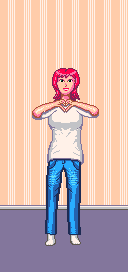
Turns out, I accidentally messed up the scale when drawing this version of Claire, and made her a bit smaller. Even worse, I then used that scale as a guide for Danielle, and as a result, her image was also smaller than I intended.
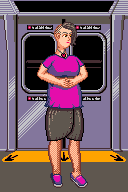
For the next character, I went with a more unusual aesthetic instead of going for “conventionally attractive” designs. I also wanted to try drawing a plus-sized character for once, and experiment with more complicated backgrounds and poses that aren’t just front-facing once again. The end result is Danielle.
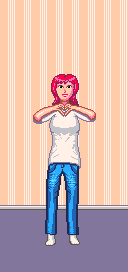
One day, I also felt like drawing Claire in a more casual outfit doing a heart shape with her hands. Probably due to a simpler pose and outfit, it only took a single day.
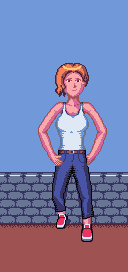
Eventually I decided to rescale the 128x128 full-body characters to the same size as Claire and Konrad. In practice, this led to severe redrawing of their features. The girl in the tank top got the name Ashley.
Eventually I decided to rescale the 128x128 full-body characters to the same size as Claire and Konrad. In practice, this led to severe redrawing of their features. The girl with the jacket was named Hannah.